The tidal Thames floodplain covers 350 sq km, including over £200 billion current property value, eight power stations and 400 schools (TE2100 Plan).
 Well designed and managed green spaces can help protect these assets from coastal and fluvial flooding.
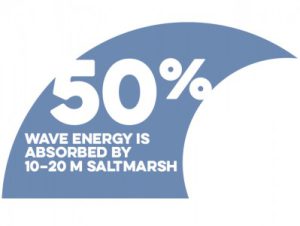
Saltmarshes provide a natural barrier in front of built defences – in Essex 370 km of 440 km seawalls rely on fronting saltmarshes to maintain flood defences. Additionally, saltmarshes save money – seawalls with no saltmarsh are 10 times more expensive to maintain than those with 60 m of fronting saltmarsh.
An award winning (CIEEM 2014 award for “NGO Impact”) habitat restoration project at Great Bells Farm on the Isle of Sheppey is also used as a “green reservoir” to protect neighbouring agricultural land from flooding in times of high rainfall.
These services are increasingly valuable to help adapt to the impacts of climate change, such as rising sea levels and changing seasonal rainfall – with benefits to both wildlife and people.
Such natural disasters as a flood are difficult to predict, but there are flood defence methods that minimize the risk of flooding and avoid significant damage.
One of the most effective ways of dealing with floods is building reservoirs. With the help of the dam, the riverbed is blocked and a reservoir is created. During a flood, excess water is retained in it, which protects the area downstream from flooding.
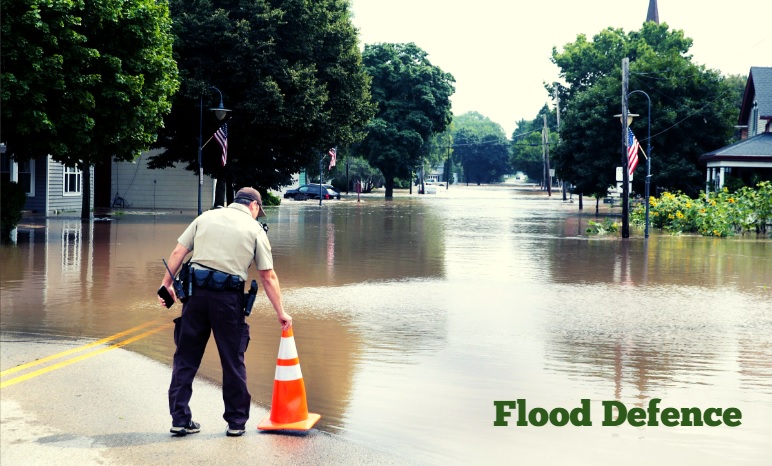
Not only dams and reservoirs but also protective dams allow to avoid flooding. They are usually erected along the banks of the rivers and the sea. They are necessary in order to protect the territory from rising waters and the effects of waves.
They also build bypass channels for the flood defence. Part of the water goes in the artificial channel, and this helps to avoid flooding the area. Another way to combat flooding is to increase the carrying capacity of rivers. For this, the river beds are widened, cleared from debris and debris, the bottom is deepened, the winding beds are made straight. Due to this, the rivers during the flood pass a greater flow of water.
And yet, settlements located along the banks and rivers and in coastal areas are periodically flooded.
Many of the flooded homes were originally built in areas prone to flooding. At the same time, capital construction is prohibited in such places, and what has already been built must be either transferred or protected by dams. Recently, the U.S. Senate adopted a bill prohibiting the construction of buildings in flood zones, unless special protective measures were taken. If the president signs the draft law, these amendments will enter into force.